
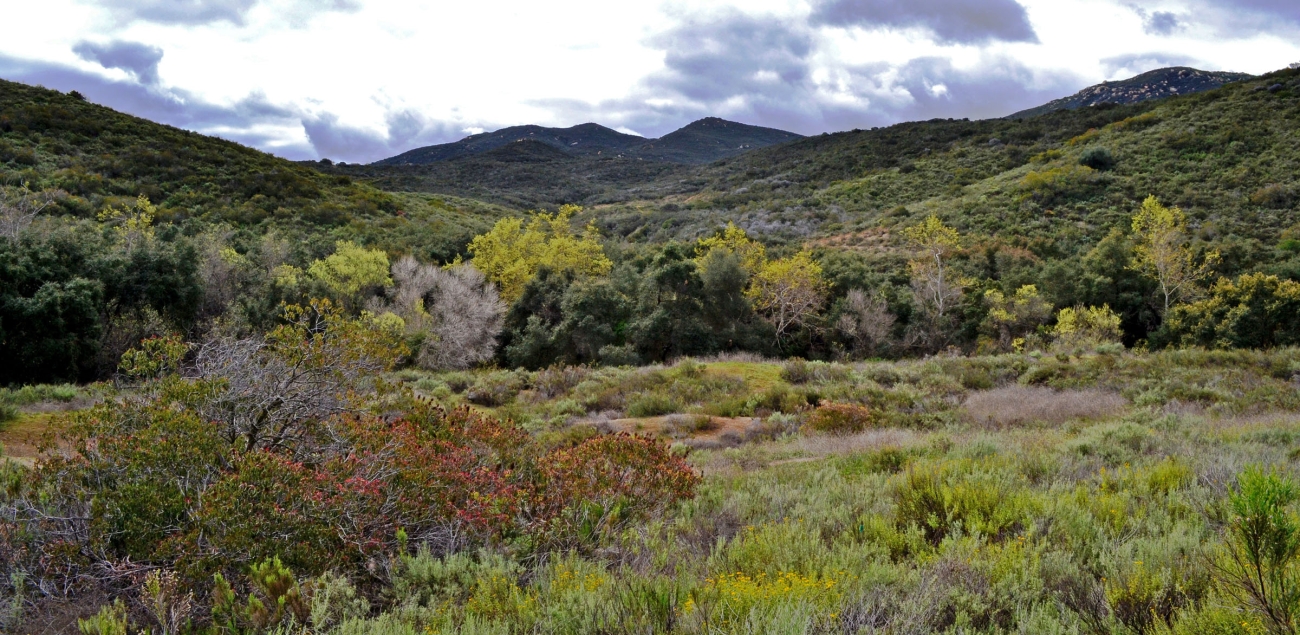
In an unpublished decision, California Chaparral Institute v. Board of Forestry and Fire Protection (May 30, 2025, No. D083484), the Court of Appeal for the Fourth District, Division One, held that the State Board of Forestry and Fire Protection’s (the Board’s) certification of the Program EIR (PEIR) for its vegetation management and treatment program (the Program) violated CEQA because it failed to make findings or discuss mitigation for vegetation type conversion impacts. The court emphasized the irony of the Board’s argument that type conversion—which results in a more flammable landscape—is not a significant impact of prescribed burns.
Background
To address the State’s wildfire crisis, the Governor issued an executive order directing the Cal Fire to improve forest management and reduce barriers for prescribed fires. The Board—the body within Cal Fire tasked with developing the State’s forest policy—proposed the Program to reduce wildfire risks via controlled burning and other techniques to decrease the types of vegetation that fuel wildfires.
Public Resources Code section 4483 requires that the PEIR for the Program provide additional consideration for sensitive chaparral and coastal sage scrub plant communities, and that treatments of these species should only occur if Cal Fire finds the activity will not cause “type conversion,” meaning a shift from native shrub-dominated vegetation to vegetation dominated by weedy or non-native grasses and herbs. The PEIR included standard project requirement (SPR) BIO-5, which would require future project proponents relying on the PEIR to avoid “type conversion” where chaparral and coastal sage scrub are present. To do so, proponents must work with qualified forestry or biological experts to design treatments that prevent type conversion, evaluate impacts at an appropriate site scale, and demonstrate that the habitat function of these species would be maintained for the affected vegetation communities.
Plaintiffs California Chaparral Institute and the Endangered Habitats League (Plaintiffs) filed a petition for writ of mandate alleging violations of CEQA and Public Resources Code section 4483. Plaintiffs argued that the PEIR fell short in several key respects. Specifically, they contended the PEIR failed to analyze the risk of vegetation type conversion from native shrublands to more flammable grasslands and improperly deferred key impact analysis to future project proponents without clear standards or guidance.
The trial court denied the petition. This appeal followed.
Appellate Decision
Vegetation Type Conversion Impacts
Regarding the effects of “type conversion,” the court explained that the PEIR acknowledged a basic problem: burning chaparral and coastal sage scrub too frequently can prevent shrubs from regenerating, converting native shrublands into grasslands that are more flammable and therefore more vulnerable to wildfire. The Board assumed that this risk would be avoided because projects must follow SPR BIO-5, which is designed to “mimic” natural fire cycles and would prevent the removal of immature shrubs. The court found this assumption was unsupported by the record. The court noted that the PEIR did not clearly prohibit burning immature shrubs. The court further observed that the PEIR acknowledged that chaparral and coastal sage scrub are already burning more frequently than under natural conditions. As a result, prescribed burns are not “restoring” a natural fire regime but instead add to already excessive fire frequency—making vegetation type conversion and increased fire risk more likely. Finally, the court explained that because wildfire timing cannot be controlled, deliberately burning these shrubs more frequently will essentially guarantee that one fire or another (wild or prescribed) will eventually cause type conversion.
For these same reasons, the court also found that the Board’s conclusion that the Program would avoid type conversion impacts by requiring treatment activities that return vegetation to their natural “condition class,” which refers to how closely an area’s current vegetation and fire behavior match what would be expected under natural fire cycles, taking into account plant composition and fire frequency.
The court also rejected the Board’s reliance on a requirement to design treatments to maintain or improve the habitat function of chaparral and coastal sage scrub. It reasoned that this standard allows prescribed burns even when shrublands are within their “natural fire return interval,” which the court explained would allow even at-risk chaparral and coastal sage scrub to be reduced by more than 65 percent—meeting the PEIR’s definition of type conversion. The court further found the Board failed to show how protecting habitat function would prevent increased fire risk, and that the record did not support the conclusion that this approach would avoid vegetation conversion or wildfire impacts.
Tiering of Impact Analysis to Future Project Proponents
The court rejected the Board’s claim that increased wildfire risk could be deferred to later project-level review, tiered off the PEIR. It held that the impact was “ripe” for program-level analysis because the PEIR already defined type conversion, acknowledged that fuel-reduction treatments could cause it, and recognized that resulting grasses are more flammable and spread fire more quickly. Citing Vineyard Area Citizens for Responsible Growth v. City of Rancho Cordova (2007) 40 Cal.4th 412, 431, the court emphasized that tiering does not excuse agencies from analyzing reasonably foreseeable significant impacts. And even if tiering were appropriate, the PEIR failed to provide meaningful mitigation guidance or performance standards for future projects.
Additional Arguments
The court rejected several other defenses raised by the Board. It held that Plaintiffs were not required to submit independent expert evidence because they relied on the PEIR’s own admissions that vegetation treatments could cause type conversion, which the court found sufficient and applicable to future conditions. The court also rejected the Board’s claim that analyzing impacts solely in terms of “habitat function” satisfied CEQA, explaining that compliance with an agency’s chosen threshold does not excuse failure to address substantial evidence of other significant impacts, including increased wildfire risk.
The court further found irrelevant the Board’s argument that Public Resources Code section 4483 imposes duties only on Cal Fire and not the Board, explaining that this does not relieve the Board of its obligations under CEQA to consider reasonably foreseeable environmental impacts of the Program. Finally, the court rejected the Board’s characterization of the case as a policy dispute, noting that Plaintiffs did not challenge the general use of prescribed fire in forests and that requiring analysis of type conversion impacts does not prevent the Board from approving treatments with appropriate findings, including a statement of overriding considerations as necessary.
The court concluded the Board’s CEQA violations were prejudicial because the absence of findings left the public without meaningful information about how type conversion would be evaluated, avoided, or mitigated, and could allow continued loss of already threatened chaparral and coastal sage scrub habitats.
Remand to the Trial Court
The matter was remanded to the trial court with directions to vacate the denial of the writ petition and issue a writ consistent with the appellate court’s decision.
On November 14, 2025, the trial court issued its final judgment and writ directing the Board to correct the CEQA deficiencies in the PEIR. Until those deficiencies are remedied, the PEIR may not be used to approve projects affecting chaparral or coastal sage scrub. The court found the type-conversion issue severable, however, and allowed specified categories of critical safety projects involving these habitats to proceed.
The Board of Forestry will be publishing the Draft EIR for the forthcoming update to the Program EIR referenced in the writ in early to mid- 2026:
https://bof.fire.ca.gov/projects-and-programs/calvtp-homepage-and-storymap/