Tag: wildfire risk

FOURTH DISTRICT HOLDS THAT THE BOARD OF FORESTRY AND FIRE PROTECTION MUST CONSIDER TYPE CONVERSION IMPACTS IN PROGRAM EIR

In an unpublished decision, California Chaparral Institute v. Board of Forestry and Fire Protection (May 30, 2025, No. D083484), the Court of Appeal for the Fourth District, Division One, held that the State Board of Forestry and Fire Protection’s (the Board’s) certification of the Program EIR (PEIR) for its vegetation management and treatment program (the Program) violated CEQA because it failed to make findings or discuss mitigation for vegetation type conversion impacts. The court emphasized the irony of the Board’s argument that type conversion—which results in a more flammable landscape—is not a significant impact of prescribed burns.

Background

To address the State’s wildfire crisis, the Governor issued an executive order directing the Cal Fire to improve forest management and reduce barriers for prescribed fires. The Board—the body within Cal Fire tasked with developing the State’s forest policy—proposed the Program to reduce wildfire risks via controlled burning and other techniques to decrease the types of vegetation that fuel wildfires.

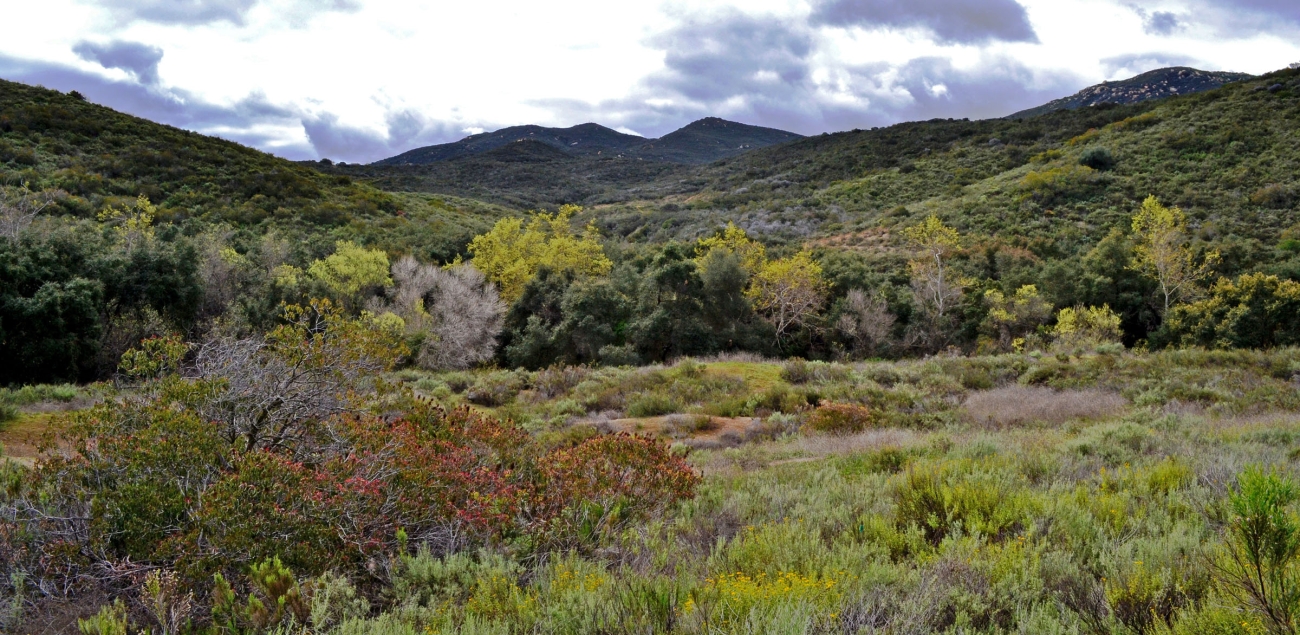
Public Resources Code section 4483 requires that the PEIR for the Program provide additional consideration for sensitive chaparral and coastal sage scrub plant communities, and that treatments of these species should only occur if Cal Fire finds the activity will not cause “type conversion,” meaning a shift from native shrub-dominated vegetation to vegetation dominated by weedy or non-native grasses and herbs. The PEIR included standard project requirement (SPR) BIO-5, which would require future project proponents relying on the PEIR to avoid “type conversion” where chaparral and coastal sage scrub are present. To do so, proponents must work with qualified forestry or biological experts to design treatments that prevent type conversion, evaluate impacts at an appropriate site scale, and demonstrate that the habitat function of these species would be maintained for the affected vegetation communities.

Plaintiffs California Chaparral Institute and the Endangered Habitats League (Plaintiffs) filed a petition for writ of mandate alleging violations of CEQA and Public Resources Code section 4483. Plaintiffs argued that the PEIR fell short in several key respects. Specifically, they contended the PEIR failed to analyze the risk of vegetation type conversion from native shrublands to more flammable grasslands and improperly deferred key impact analysis to future project proponents without clear standards or guidance.

The trial court denied the petition. This appeal followed.

Appellate Decision

Vegetation Type Conversion Impacts

Regarding the effects of “type conversion,” the court explained that the PEIR acknowledged a basic problem: burning chaparral and coastal sage scrub too frequently can prevent shrubs from regenerating, converting native shrublands into grasslands that are more flammable and therefore more vulnerable to wildfire. The Board assumed that this risk would be avoided because projects must follow SPR BIO-5, which is designed to “mimic” natural fire cycles and would prevent the removal of immature shrubs. The court found this assumption was unsupported by the record. The court noted that the PEIR did not clearly prohibit burning immature shrubs. The court further observed that the PEIR acknowledged that chaparral and coastal sage scrub are already burning more frequently than under natural conditions. As a result, prescribed burns are not “restoring” a natural fire regime but instead add to already excessive fire frequency—making vegetation type conversion and increased fire risk more likely. Finally, the court explained that because wildfire timing cannot be controlled, deliberately burning these shrubs more frequently will essentially guarantee that one fire or another (wild or prescribed) will eventually cause type conversion.

For these same reasons, the court also found that the Board’s conclusion that the Program would avoid type conversion impacts by requiring treatment activities that return vegetation to their natural “condition class,” which refers to how closely an area’s current vegetation and fire behavior match what would be expected under natural fire cycles, taking into account plant composition and fire frequency.

The court also rejected the Board’s reliance on a requirement to design treatments to maintain or improve the habitat function of chaparral and coastal sage scrub. It reasoned that this standard allows prescribed burns even when shrublands are within their “natural fire return interval,” which the court explained would allow even at-risk chaparral and coastal sage scrub to be reduced by more than 65 percent—meeting the PEIR’s definition of type conversion. The court further found the Board failed to show how protecting habitat function would prevent increased fire risk, and that the record did not support the conclusion that this approach would avoid vegetation conversion or wildfire impacts.

Tiering of Impact Analysis to Future Project Proponents

The court rejected the Board’s claim that increased wildfire risk could be deferred to later project-level review, tiered off the PEIR. It held that the impact was “ripe” for program-level analysis because the PEIR already defined type conversion, acknowledged that fuel-reduction treatments could cause it, and recognized that resulting grasses are more flammable and spread fire more quickly. Citing Vineyard Area Citizens for Responsible Growth v. City of Rancho Cordova (2007) 40 Cal.4th 412, 431, the court emphasized that tiering does not excuse agencies from analyzing reasonably foreseeable significant impacts. And even if tiering were appropriate, the PEIR failed to provide meaningful mitigation guidance or performance standards for future projects.

Additional Arguments

The court rejected several other defenses raised by the Board. It held that Plaintiffs were not required to submit independent expert evidence because they relied on the PEIR’s own admissions that vegetation treatments could cause type conversion, which the court found sufficient and applicable to future conditions. The court also rejected the Board’s claim that analyzing impacts solely in terms of “habitat function” satisfied CEQA, explaining that compliance with an agency’s chosen threshold does not excuse failure to address substantial evidence of other significant impacts, including increased wildfire risk.

The court further found irrelevant the Board’s argument that Public Resources Code section 4483 imposes duties only on Cal Fire and not the Board, explaining that this does not relieve the Board of its obligations under CEQA to consider reasonably foreseeable environmental impacts of the Program. Finally, the court rejected the Board’s characterization of the case as a policy dispute, noting that Plaintiffs did not challenge the general use of prescribed fire in forests and that requiring analysis of type conversion impacts does not prevent the Board from approving treatments with appropriate findings, including a statement of overriding considerations as necessary.

The court concluded the Board’s CEQA violations were prejudicial because the absence of findings left the public without meaningful information about how type conversion would be evaluated, avoided, or mitigated, and could allow continued loss of already threatened chaparral and coastal sage scrub habitats.

Remand to the Trial Court

The matter was remanded to the trial court with directions to vacate the denial of the writ petition and issue a writ consistent with the appellate court’s decision.

On November 14, 2025, the trial court issued its final judgment and writ directing the Board to correct the CEQA deficiencies in the PEIR. Until those deficiencies are remedied, the PEIR may not be used to approve projects affecting chaparral or coastal sage scrub. The court found the type-conversion issue severable, however, and allowed specified categories of critical safety projects involving these habitats to proceed.

The Board of Forestry will be publishing the Draft EIR for the forthcoming update to the Program EIR referenced in the writ in early to mid- 2026:

https://bof.fire.ca.gov/projects-and-programs/calvtp-homepage-and-storymap/

Veronika Morrison & Christina Berglund 

FIRST DISTRICT COURT OF APPEAL HOLDS POST-FEIR WILDFIRE IMPACT ANALYSIS LEGALLY DEFICIENT

In Bonta v. County of Lake (2024) 105 Cal.App.5th 1222, the First District Court of Appeal ruled that the EIR for a proposed luxury resort in an unincorporated portion of Lake County was deficient for failing to provide a timely, project-specific disclosure of increased wildfire risk.

Background

Lotusland Investment Holdings proposed construction of a luxury resort on 16,000 acres in an unincorporated and undeveloped portion of Lake County.  During the public comment period on the Draft EIR, commenters raised several issues, including the discussion of impacts related to wildfire, GHG emissions, and groundwater. The County included additional information in an “errata” after the Final EIR was released. In particular, the errata included a discussion of wildfire risks and additional mitigation for GHG impacts that required the developer to purchase offset credits if feasible.

Several petitioners filed lawsuits challenging the EIR, alleging (among other things) that its analysis of wildfire, GHG, and groundwater impacts was inadequate, and that the Couty improperly rejected feasible alternatives. The trial court ruled that the EIR violated CEQA by failing to consider the project’s impact on the community’s ability to evacuate from a wildfire but rejected the petitioners’ other contentions. The petitioners appealed.

The Court of Appeal’s Decision

Wildfire

First addressing the petitioners’ wildfire arguments, the court noted that CEQA requires public agencies to meaningfully consider and mitigate the potential adverse environmental impacts of their actions and communicate those potential impacts to the public via an EIR. To properly communicate those impacts to the public, the court explained, an EIR must include enough information to allow a person who is unfamiliar with the project to understand and meaningfully consider the potential impacts of the project.

Here, the court found that the EIR failed as an informational document. Specifically, neither the Draft or Final EIR addressed the increase in wildfire risk associated with the Project. Instead, the environmental documents discussed project features that would reduce the wildfire impacts of the Project to a less-than-significant level without explicitly outlining the Project’s wildfire impacts.

The court found that the 11th-hour errata to the FEIR did not remedy this informational deficiency for two reasons. First, the errata was substantively deficient because it only generically identified the sorts of human activities that increase wildfire risk in previously undeveloped areas. Instead, the County should have tailored the wildfire impact discussion to include project-specific analysis focused on the development of a luxury resort in undeveloped and unincorporated Lake County.

Second, the court found that the errata was published too late in the CEQA process to be effective as a tool to inform the public of the potential environmental impacts of the Project. The court found that the County’s process did not allow the public to meaningfully evaluate the potential environmental impacts of the project prior to the certification of the FEIR, which in this case occurred less than a week after the errata was published.

GHG Emissions

The Court of Appeal agreed with the petitioners’ argument that the carbon offset program, which was added to the final EIR via the errata, was legally infeasible by the County’s own rationale: the developer could not guarantee that quality carbon credits would be available to purchase when necessary. However, the court found no authority for the contention that CEQA bars considering potentially beneficial measures that agencies deem too uncertain to be feasible. Importantly, moreover, the environmental analysis did not rely on the offset program to eliminate the project’s impacts, and therefore, any error in including the carbon credit program in Final EIR was not prejudicial.

Groundwater

The petitioners argued that the EIR was legally deficient for failing to calculate the amount of water that the project would draw from an off-site well. The court rejected this argument, finding that the EIR need not speculate as to how much water would be drawn from the well because the EIR clearly stated that the off-site well would only be used in extreme circumstances, and that the project would ordinarily be fully supplied with on-site sources.

FIRST DISTRICT UPHOLDS LESS THAN SIGNIFICANT IMPACT DETERMINATION FOR BIOLOGICAL RESOURCES BASED ON SURVEY THAT PREDATES THE NOP, AND ON PUBLIC SAFETY BASED ON CITY STAFF EXPERTISE

In Save North Petaluma River and Wetlands v. City of Petaluma (2022), 86 Cal.App.5th 207, the First District Court of Appeal upheld an EIR’s analysis of an apartment complex’s impacts on biological resources and public safety. The court concluded that the EIR’s reliance on a special status species survey conducted several years before the NOP was issued, as well as review of more recent databases, was sufficient to support its conclusion that the Project would have a less than significant impact. It also concluded that the City’s reliance on its staff’s expertise was sufficient to support its conclusion that the Project would not have a significant impact on public safety related to emergency evacuation.

Background

In 2007, the City published a Notice of Preparation (NOP) for a 312-unit apartment complex in the City of Petaluma. In May 2008, the applicant submitted an application for a smaller 278-unit complex to comport with the City’s newly adopted 2025 General Plan. In March 2018, the City published a draft EIR for the complex, which included a 2004 consultant report on special status species in the Project area. In October 2019, the City issued a final EIR for the Project, concluding that the changes made in the reduced-scale version of the complex eliminated or reduced several of the potentially significant impacts identified in the Draft EIR. The Planning Commission recommended that the City Council certify the final EIR, but did not recommend approving the necessary zoning amendments.

In January 2020, in response to public comment and input from public agencies, the applicant submitted a second reduced version of the Project with 180 units (hereinafter, the Project), reducing the building footprint and increasing the setback from the Petaluma River, preserving two wetlands near the river and avoiding development in the River Plan Corridor, and preserving additional trees with a flood terrace design adjustment. A City staff report determined that this second revised version of the Project reduced impacts and addressed the Planning Commission’s concerns regarding the zoning amendments, and concluded that the second revised Project was within the reasonable range of alternatives addressed in the EIR and would not result in new or more substantial impacts compared to prior versions. The City certified the EIR and overturned the Planning Commission’s denial of zoning amendments. In February 2020, the City approved the zoning amendments by ordinance.

Save North Petaluma River and Wetlands and Beverly Alexander (Petitioners) field a petition for writ of mandate challenging the adequacy of the EIR on several grounds. The trial court denied the petition and Petitioners appealed.

Court of Appeal’s Decision

Special Status Species Impact Analysis

The court rejected Petitioners’ argument that the EIR’s impact analysis of special status species was deficient.

It explained that the EIR did not fail to investigate the project’s baseline conditions as of 2007 when the NOP was published because the 2004 special status species survey was based on current data at the time, and the EIR included database reviews from more recent years—as recent as 2017. The court further explained that there is no authority suggesting that CEQA is violated where an EIR’s analysis is drawn from site visits, studies, and habitat evaluations undertaken both before and after the NOP. Further, the court noted that Petitioners did not cite any evidence that the biological conditions at the Project site differed from 2004 to 2007, or in later years when updated databases were consulted.

Moreover, the court reasoned that Petitioners failed to challenge the EIR’s description of existing conditions and habitats on the undeveloped Project site, and that there is no evidence that the EIR omitted or inaccurately described the material aspects of the biological conditions on or near the Project site. The court distinguished this case from a string of cases where an EIR purported to measure impacts based on conditions that did not exist on the Project site or on conditions that were forecasted to exist at some point in the distant future. (See, e.g., Madera Oversight Coalition, Inc. v. County of Madera (2011) 199 Cal.App.4th 48.)

The court held that the EIR’s references to studies and site visits constitute substantial evidence supporting its special status species analysis because factual information in the EIR itself may constitute substantial evidence in the record to support the agency’s action on the project. (CEQA Guidelines, § 15121, subd. (c).) The court explained that it is appropriate to cite, but not include such documents in the EIR.

Therefore, the court held that the EIR’s analysis and information upon which it relied regarding the Project’s impacts on special status species was sufficient, and accordingly rejected Petitioners’ further contend that the EIR failed to offer recommendations that would adequately mitigate the Projects impacts on these species.

Emergency Evacuation & Public Safety Impact Analysis

The court also rejected Petitioners’ argument that the EIR was deficient because it omitted an analysis of egress and evacuation safety based on public comment documenting flooding and grass fires in the area. The court instead held that the EIR’s conclusion that the Project would not impair implementation of, or physically interfere with, an adopted emergency response plan or emergency evacuation plan was supported by substantial evidence, noting thde EIR’s adoption of the 2013 California Fire Code, consultation with the Petaluma Fire Department, and incorporation of additional recommendations and approval from the City Fire Marshal.

The court also explained that an agency may rely on the expertise of its staff to determine that a project will not have a significant impact, and that the City therefore appropriately relied on a City staff memorandum corroborating the public safety analysis in the EIR and reflecting information from the City’s Assistant Fire Chief confirming that the Fire Department does not have significant flood or fire access or egress concerns with development above the 100-year floodplain at the site. Additionally, the court rejected Petitioners’ claim that the City staff memorandum is improper post-EIR analysis, distinguishing this case from Sierra Watch v. County of Placer (2021) 69 Cal.App.5th 86.

–Veronika Morrison